

WHAT I LEARNED ABOUT STREET PHOTOGRAPHY RULES AFTER A DECADE ON THE STREETS

After years of shooting on the streets, I've learned that some of the most cherished "rules" are meant to be broken.
When I first started, I tried to follow EVERY piece of advice to the letter: "shoot wide," "stay invisible," "never interact."
But the more I immersed myself in the rhythm of the streets, the more I realized that the reality is far more nuanced.
The true essence of street photography lies in understanding the spirit of these concepts, rather than blindly following them.
Today, I want to share some of those moments of realization.
THE FOCAL LENGTH "MYTH": ARE CLOSE ENCOUNTERS THE ONLY WAY?
Let's kick things off with a common idea: is street photography only done with wide-angle lenses? The traditional view is that to really be in the street, you need to shoot from within it. The photographer on the street is part of the street.
By using a long lens, you distance yourself; you become an outsider looking in. And generally speaking, doing street photography with a telephoto lens can be tricky, simply because you become so visible. The other thing often mentioned is that telephoto street shots tend to be close frames with a shallow depth of field, which can add very little context to the person you're photographing. It often ends up being just one or two subjects, not really showing that person actively engaging with the street. To get that engagement, you usually need a larger depth of field and a wider perspective, giving enough room for context.

BUT SAYING THAT... it absolutely DOESN'T mean you can't use a telephoto lens for street photography. Sometimes you simply can't physically get close to an interesting story, and a longer lens becomes the ONLY way. The key here is INTENTIONALITY.
If you're using a telephoto, think about why. Are you observing from a distance to avoid altering a moment? Are you using the compression to create interesting layers? Or are you focusing intently on a specific detail?
And it's important to remember, not everyone feels comfortable photographing people from a close distance, like Martin Parr or Bruce Gilden. Every photographer has their own personal comfort zone, which usually shrinks over time, but it's hard to force.
People who feel comfortable getting close often shoot with 28-35mm lenses, with slightly more shy ones using 50mm. Anything longer than 70mm generally distances you from that immediate street feel. Saul Leiter is said to have used a 90mm quite a lot, but his style is less about people interacting with the environment and more about creating abstract, atmospheric images where the human element plays just a small role.
From more recent photographers, Billy Dinh is one that comes to my mind when I think about who uses telephoto lenses with great success.

To sum up this concept: YES, you can shoot with a telephoto on the street, but it needs to be INTENTIONAL. You need to understand that you are creating not only physical but EMOTIONAL distance. And you should have a SPECIFIC REASON for that; otherwise, you will just get very random results.
THE INVISIBLE PHOTOGRAPHER? INTERACTION ON THE STREET
Now, let's talk about the idea that the photographer shouldn't interact with the people they photograph in any way, being a complete fly on the wall.
The reality is, the photographer very often DOES have an impact, even without directly interacting or altering the scene in an obvious way. Your mere presence can affect what unfolds. Someone reacts a certain way when they see you're about to take a photograph, or you make a small noise that makes the person look in your direction.
There's an interesting story about one of Henri Cartier-Bresson's photographs. Legend has it that he saw a man in a raincoat with an umbrella that he really wanted to photograph.
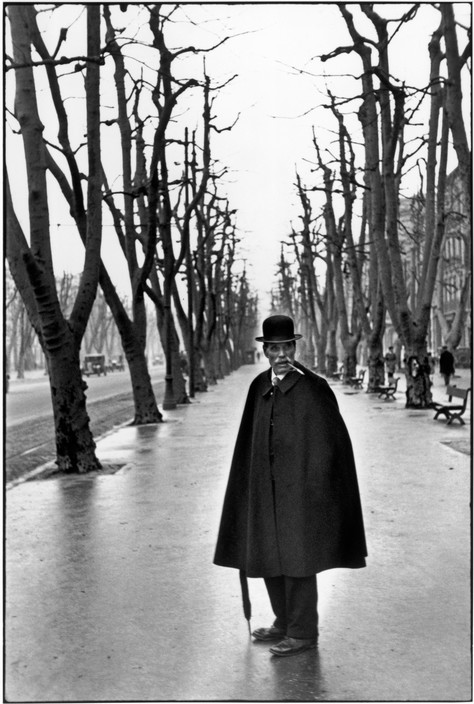
So Bresson started following him, searching for an opportunity. But the man noticed him and began walking faster. Bresson didn't give up and continued. At one point, the man turned around with this "Dude! What's happening here?" expression. And that was the moment Bresson pressed the shutter. He didn't directly change the scene, but his presence definitely created the tension that led to the EMOTIONAL BURST that made the photo.
As we said before, the photographer is part of the street, and your behavior within that environment can influence situations. But actively engaging, stopping, and directing people goes against the unspoken rules. Some photographers do it, I've seen it happen many times. I don't like it, but ultimately, it's their business how they approach their photography.
One pro tip: unless you're specifically looking for eye contact or interaction before you take the shot, avoid direct eye contact with the person you're about to photograph. People can often feel when someone is looking at them. Unless you WANT that, a direct gaze can be read as a challenge or a sign of interest before the moment occurs.
PERMISSION, PLEASE? THE ETHICS OF STREET PHOTOGRAPHY
This leads us to the BIG question: does a street photographer need to ask for permission? One argument says that if a person is in a public place, they can be seen, and if they can be seen, the logic follows that they can also be photographed.
But let's be HONEST... street photography is a bit of a "theft" in a way. We're taking something that doesn't truly belong to us; we're photographing without explicit permission. So we need to be ready for potentially negative outcomes. And every photographer needs to decide for themselves how much they're willing to take something that isn't theirs. This can range from a very intrusive approach to photographing unobtrusively and creating more neutral images.
This brings us to ethics. What would someone like Martin Parr or Bruce Gilden say about asking for permission? I don't know exactly how they handle issues after the photograph is taken, but the fact is, they've been doing it for years, and that style has a lot of followers. Though at one point Martin Parr went out to the street with that sign... so maybe he had some unpleasant interactions.
Legally, things get even more complex. In some places, you can photograph people in public spaces as long as you don't damage their public image. In the US: no reasonable expectation of privacy when you are in public. In other countries, you cannot photograph a person without permission if they are the main subject, but if they're part of a broader public scene, it might be allowed. And there are definitely separate and much stricter rules for photographing children.
The key takeaway: know the local laws. But also understand that the people we photograph most likely don't know privacy law by heart. Their reaction will be based on their personal feelings in that moment.
So, should we or shouldn't we? It's UP TO YOU. If you ask permission first, you can't get a candid shot. I liken it to quantum physics, where the very act of observation changes the outcome; similarly, the act of asking permission changes the outcome of the image. You can ask permission and stick around until they stop paying attention to you, but in general, you're losing the candid moment.
Street portraits, with the subject posed, are also a legitimate style of photography, but they have a totally different vibe from candids.
THE LOWDOWN: SHOOTING FROM THE HIP

Following the permission topic, the most logical approach for discreet street photography might seem to be shooting in a hidden way, like from the hip.
To be HONEST, I haven't seen a lot of consistently good work made that way. Occasionally there's a good shot, simply because that angle of view makes the photograph more interesting. But shooting ALL THE TIME from the hip creates one type of image that isn't very engaging.
More than that: if street photography is about depth and connection, shooting in a completely hidden way can feel a bit like spying or "peeping." It can be unpleasant, and if you get caught, it's EVEN MORE unpleasant, because now you need to explain your behavior. Things can go much worse than if you were shooting openly.
The general consensus among experienced street photographers is to be OPEN; don't hide. Otherwise, it's not much different from using a hidden camera. But now I'll contradict myself. There are still valid reasons to shoot from the hip: when you're in very close proximity and want to avoid a direct gaze into the frame, or when you want a very low angle.
With time and practice, "hip shooters" learn to feel the distance and compose from that hip or belly level. Even the famous Gueorgui Pinkhassov used to photograph in the metro with his screen up, pretending to review photos. But remember, INTENTIONALITY is key. It shouldn't be your default.
My verdict is... It's okay, but DON'T make a habit of it, and DON'T do it out of fear!
FRONT AND CENTER? THE "NO SHOOTING FROM THE BACK" RULE
This is a VERY popular one, and I'm often asked about it: is it valid to photograph people from the back?

The idea that photographs should be shot from the front comes from a basic concept: a person has a face, the face has emotions and eyes. Emotions speak about their mental state, and the eyes are the "window to the soul," adding strength to the photograph and drawing MORE attention. And it's TRUE... a person's face is a massive attention trigger. I completely agree.
As for me personally: The question is what kind of back we are shooting here.
I actually LOVE photographing from the back. But these photographs MUST have context. They need to tell you something about the person or the situation. I sometimes call them “faceless portraits.”
Another reason against the strict "no backs" rule: in street photography we often photograph a scene, and the human form is just one part of the narrative. A face looking directly at you can pull UNNECESSARY attention to the individual, whereas photographing from the back keeps the focus on the broader context. So while faces are powerful, DON'T dismiss the potential of a well-composed shot from behind.
My verdict is... It's OKAY!!
THE CLICHÉ ZONE: POSTERS, BEGGARS, AND BUSKERS

Now, some common "no-nos." First up: "No posters and advertising in the frame, it's a cliché." Well, yes, it can be. But a SIGNIFICANT amount of street photography is actually built around exactly that. The key to making it work is to have the advertising very well integrated into the frame, or to create a VERY STRONG juxtaposition between the advertising and your subject.
Then there's "No beggars and buskers, too easy." Buskers are VERY tempting; they can have beautiful makeup and outfits, and they're extremely photogenic. But the general rule of a good photographer is NOT to shoot what so readily invites itself to be photographed. Think about it: a busker dresses up specifically so people come and take photos. These photos have very little deeper value, unless there's a REALLY STRONG juxtaposition, or you integrate them into a story that goes beyond their appearance.
Similarly with beggars and homeless people. Unless you want to HELP them with your photography, you are just using their misfortune. So my verdict here is... Try to AVOID.
THE CROPPING DEBATE: IN-CAMERA PERFECTION?
Next: "No crop! Cropping your photographs is a sign that you were unable to build a proper frame in the first place."
There's an interesting story about this. Henri Cartier-Bresson was one of the BIG supporters of this rule, but ironically, his famous photograph illustrated in most books about the decisive moment is actually CROPPED! Yep, the shot is cropped on the left side, because one of the fence grids he was shooting through got into the frame, so it was cropped out later.

My take, and many pros will agree: we do our best to compose perfectly on the scene, without needing to crop.
That approach PUSHES you to become a better photographer.
But DON'T beat yourself up if something didn't work.
Hey, the street is NOT a studio!
Don’t feel guilty when a small crop is needed to refine the image; no one's going to penalize you. Just avoid making cropping a HABIT.
THE DECISIVE MOMENT REVISITED
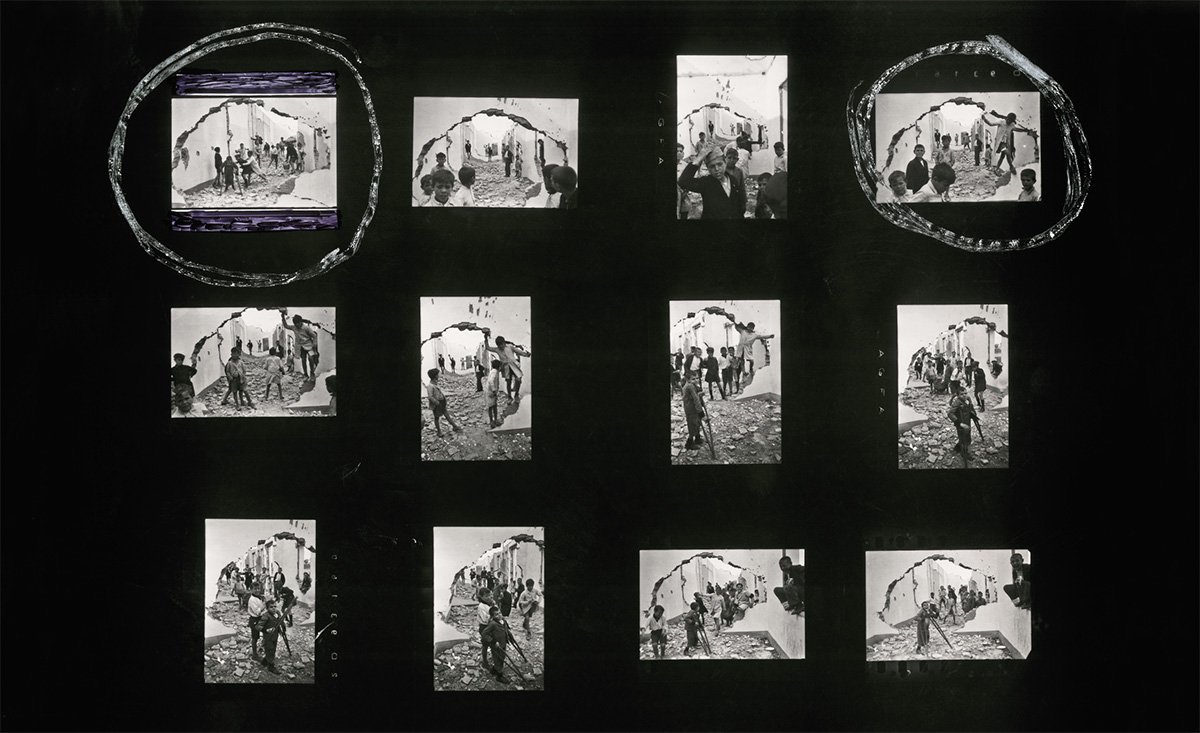
And while we're on Henri's work, let's revisit the concept of the decisive moment. It's a VERY good concept, but people often take it wrongly, thinking you need to take a SINGLE photo that perfectly captures one specific instant. Henri Cartier-Bresson NEVER claimed to take only one photo of a scene. In reality, there can be DOZENS of different "decisive moments" within a single unfolding situation.
If Bresson saw a good scene, he would work the scene, sometimes shooting 20 or more frames, timing it as best he could.
And I'm the same. When I come back home, I don't have 200 different moments; I have 20-30, with several angles and decisive moment variations.
So, rules matter, but your idea matters MORE. One of the key concepts of street photography is to bring a little more than just the object itself. Do that, and be INTENTIONAL with whatever approach you take. After all, most of us do this photography because we ENJOY it.
So do it your way, enjoy the journey, and remember it's not about the results or reaching the top.
ALL THE GOOD STUFF HAPPENS ALONG THE JOURNEY!
Happy shooting